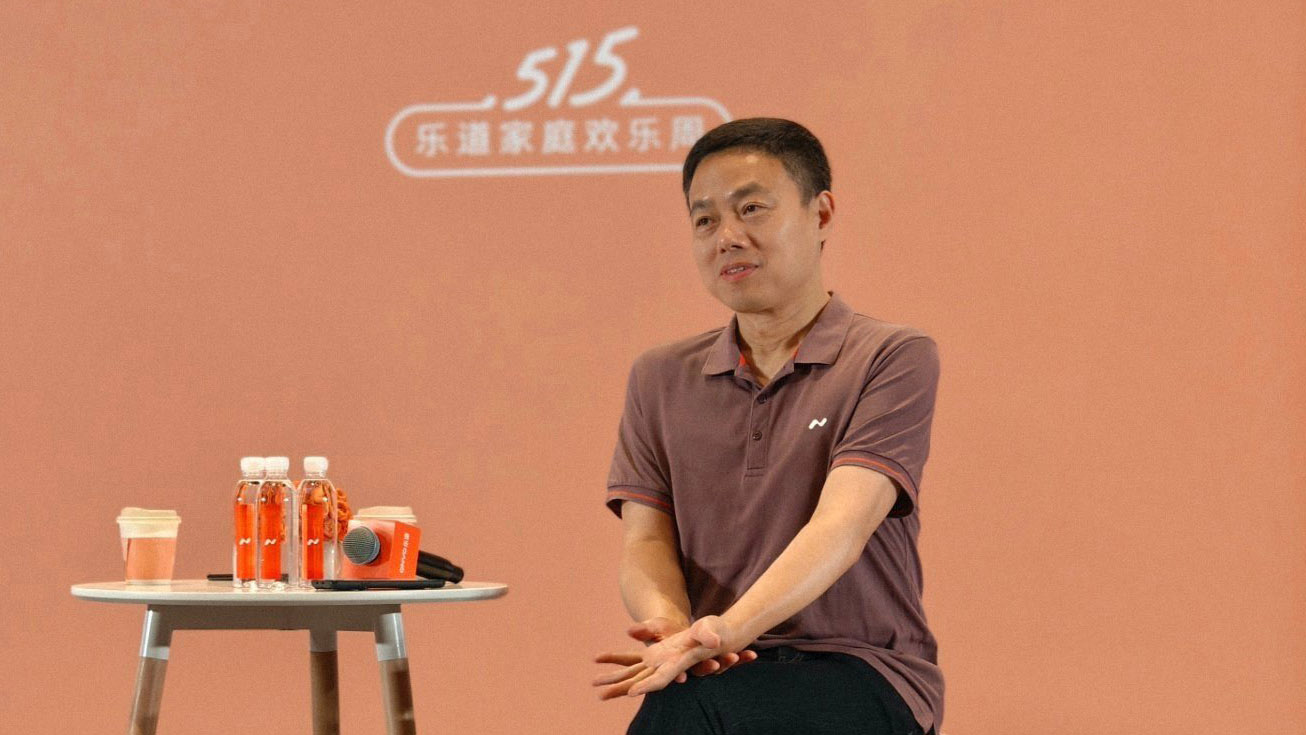
Shen Fei, the chief of Nio's family-focused sub-brand Onvo, gave an interview to 21st Century Business Herald this week that was sharper than the headline lets on. "Selling cars is tougher than getting into Tsinghua, or building Nio's battery swap network," he said, ranking the family-brand presidency above the elite-university entrance exam and the energy business he spent years constructing.
The line is good copy. The position underneath it is the real story, and Shen is saying publicly what Nio's own CEO has been signaling in code for months.
What Shen is actually saying
Three claims, each of them more pointed than the interview's framing suggests:
- Volume can't be planned like infrastructure. Shen previously ran Nio Power, the unit that built the battery-swap network from zero. That work was plannable: clear goals, capital, headcount, station count, timeline. Selling cars isn't. The variables — buyer awareness, rival moves, price swings, regional gaps, the hesitation of a family at the moment of decision — can't be dialed up like a station count.
- The price discipline is a feature, not a constraint. Shen pushed back on the obvious read of Nio's margin warning earlier this month, where CEO William Li described the new L60's margins as "pretty dire." Shen framed holding prices steady across refreshes — absorbing higher component costs without raising stickers — as "another kind of price cut," one that protects a sustainable business rather than chasing volume.
- The brand has an awareness problem, not an appeal problem. Shen spent most of the interview dismantling the perception that Onvo is "a downgrade from Nio." His answer: same quality system, different positioning, real buyers (mid-level corporate managers, family-car shoppers) who aren't trading down — they're shopping a different segment.
These three claims are individually defensible. Taken together, they make a coherent argument that Onvo is being run on a different playbook than Nio's premium halo brand, with a thesis that doesn't fit the standard "Chinese EV company piles on volume to win share" narrative.
Why Shen's interview matters more than the headlines say
Most EV executive interviews in 2026 follow the same template: a product launch, a vision statement, a vague claim about scale, a polite dodge on margin pressure. Shen's interview breaks the template because he admits two things most Chinese EV executives won't:
- The work is harder than the work that came before it. Most execs talk about new ventures as if they're the natural next step. Shen is saying the new venture is harder, and he's the same executive who did the previous, "easier" thing.
- The volume math doesn't reward chasing volume. This is the actual knife-edge of the Chinese EV market in 2026: every brand is running a price war, and every brand is losing money per car. Shen is publicly arguing that Onvo's strategy of holding prices through refreshes — even when component costs rise — is the difference between a brand and a clearance bin.
That argument runs directly against what CEO Li said days earlier about the L60's margins. Two senior executives, same company, two coherent but incompatible stories about the same product's economics.
What's actually going on at Nio Group
The most charitable read of the dissonance: Li is right about unit economics, and Shen is right about brand economics. The L60 is genuinely under pressure on margin because of component costs. But the right answer to that pressure is not to cut the sticker, because cutting the sticker moves Onvo out of the buyer pool it built for itself. The right answer is to hold the line, accept the margin squeeze for a quarter or two, and let brand equity compound.
The less charitable read: Li is sounding the alarm because the broader Nio group is burning cash and the public markets want to see margin repair. Shen is sounding the alarm about a different problem, which is that Onvo can't buy awareness at any price that pencils out, and the awareness gap is the binding constraint on every other metric.
Either read makes the Shen interview worth reading.
What it tells us about the next 18 months
Three things to watch:
- Whether Onvo's NPS holds. Shen cited an NPS near 71% and a recent owner gathering of nearly 300 people with 50+ children. If those numbers hold through the next two quarters without a major product issue, the appeal-side argument survives. If they slip, the awareness-spend argument loses its foundation.
- Whether Onvo opens the 200–300 new sales points it announced. Shen said 1,000 more swap stations this year and 200–300 new stores by end of next year. Those numbers are verifiable, and they will tell you whether the strategy is being executed or floated.
- Whether Li and Shen keep disagreeing in public. A second, sharper public dissent on price strategy would force Nio's board to pick a side. Right now the company can run two narratives; it cannot run two price strategies.
The verdict
Shen Fei didn't give a standard EV executive interview. He gave one that, taken seriously, implies his own CEO is wrong about the right pricing strategy for the brand he runs. That doesn't make Shen right. It does make the interview worth a serious read by anyone trying to understand what Nio Group is doing in 2026 — because the executive who built the swap network is now telling you, in plain language, that the swap network was the easy part.
Source: Eletric-Vehicles.com — Onvo Chief Says Selling EVs Is Harder Than Building Nio's Battery Swap Empire. Interview by Cláudio Afonso for 21st Century Business Herald. AutoWheeler analysis built on the source interview; opinion and interpretation are our own.