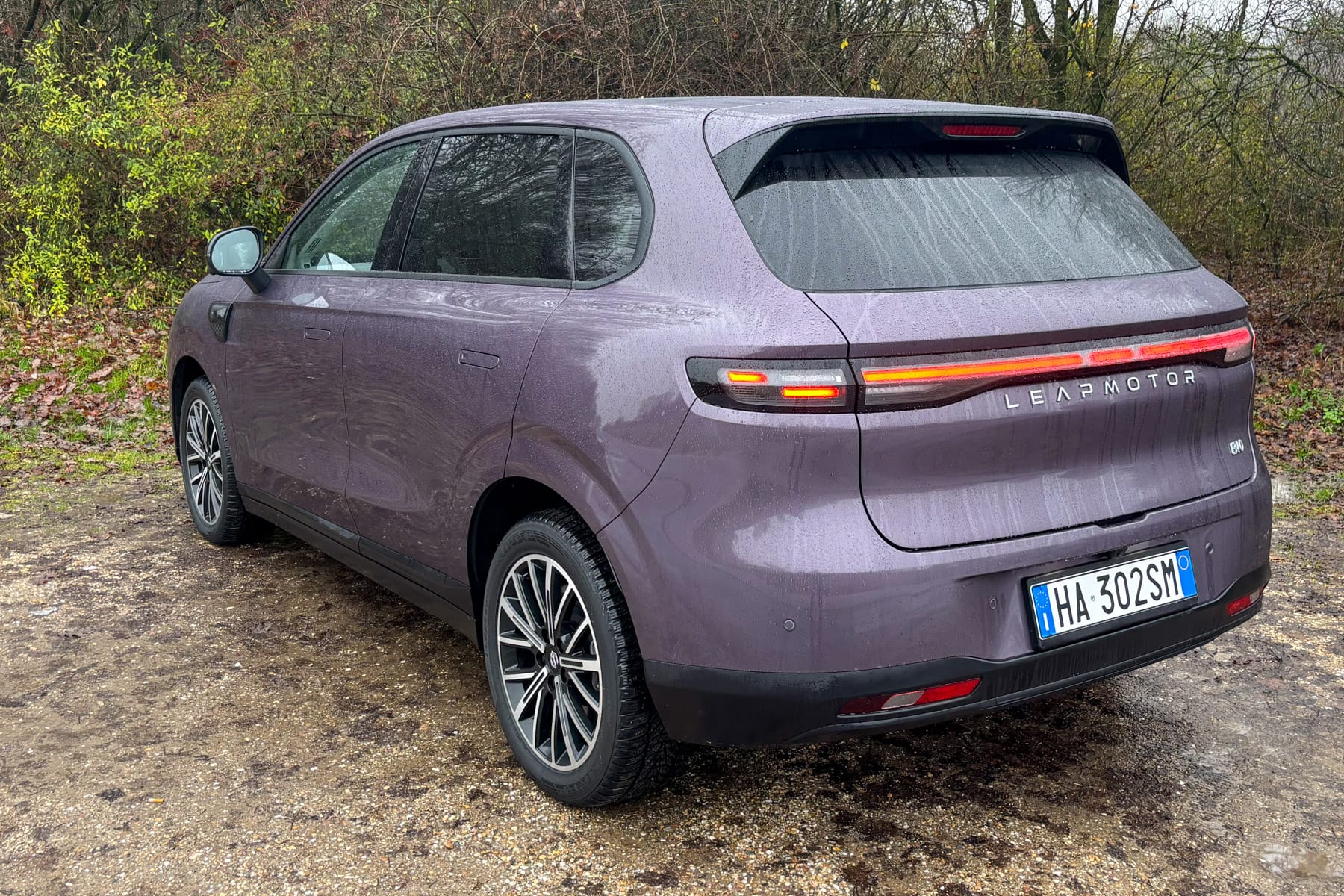
Leapmotor International opened a battery assembly workshop this week in Mallén, Spain, adjacent to the existing Stellantis-CATL plant. The announcement doesn't look like much on its own — a battery workshop, not a gigafactory. But the workshop is one piece of a manufacturing buildout that, taken together, changes the map of where European EVs are actually built.
The headline is the workshop. The story is the cluster forming around it.
What was actually announced
Leapmotor International — a joint venture owned 51% by Stellantis and 49% by Leapmotor — confirmed the opening of a battery assembly facility in Mallén, in the Aragón region of northeastern Spain. The site sits next to Stellantis's existing plant operations near Zaragoza, which is already running an EV battery partnership with CATL.
The workshop handles battery assembly, not cell manufacturing. That's a meaningful distinction — cells still come from upstream suppliers, primarily CATL — but it's also the right next step for a JV that needs to localize enough of the value chain to justify European production economics.
What the cluster around it looks like
The Mallén workshop is the visible part of a much larger buildout. Stellantis confirmed in March 2026 that the Leapmotor B10 SUV will roll off its Figueruelas production line near Zaragoza in the second half of 2026, with CEO Antonio Filosa announcing the schedule alongside Stellantis's financial results. That's the same plant complex as the new battery workshop.
A few pieces of the cluster:
- Local chassis supplier. Lieder Automotive — a joint venture between Chinese component maker Duoli Technology and Basque supplier Fagor Ederlan — is preparing to manufacture chassis components for the B10 locally, with production starting July 2026. The supplier was set up specifically to feed the Figueruelas line.
- More Leapmotor models. Leapmotor's Global Quality Director Ding Yongfei outlined in December 2025 that additional models — the B05, A10, and A05 — would also roll off the Figueruelas line from 2027. The A10, a small car sold in China, will be marketed in Europe as the B03X.
- Opel joint development. In May 2026, Opel officially confirmed joint development of a new C-segment electric SUV with Leapmotor, also to be built at Zaragoza from 2028. Opel CEO Florian Huettl said the partnership enables a development cycle of under two years — a pace that would be hard to hit with a fully in-house European EV program.
Why this is a real European manufacturing story, not a press release
The framing of Chinese OEMs entering Europe tends to split into two camps: "they're going to flood our market with cheap imports" and "they're hollowing out European manufacturing." Neither frame is what Mallén looks like. What Mallén looks like is:
- A Chinese OEM and a European OEM co-locating production at an existing European site.
- A Spanish supplier ecosystem being built around that production — not just Lieder Automotive, but the entire Fagor Ederlan Tier 1 network.
- Multiple product programs scheduled through 2028, not a single-market trial.
- A European-staffed R&D function for the Opel SUV — Opel's Rüsselsheim team handles design, chassis, and user interface; Leapmotor's Chinese team handles the electric architecture.
That's not import substitution. It's integration. And integration looks different from how either side of the trade debate usually describes it.
What the B10 itself tells you
The B10 is a 4.52-metre-long battery-electric SUV, positioned between compact and mid-size segments. It uses LFP battery chemistry with energy capacities of 56.2 kWh and 67.1 kWh, supports charging at up to 168 kW, runs a 160 kW motor, and posts a WLTP range of up to 434 km.
Those numbers aren't class-leading. The 168 kW charging speed is below what most Korean and European EVs offer today. The motor output is mid-pack. The WLTP range is competitive but not exceptional.
What the B10 does offer is price. It enters Germany at €29,990, with the larger-battery, fully-equipped variant at €33,990. That's roughly €7,000–€10,000 below comparable European-built EVs in the same segment. The margin compression this forces on the European incumbents is the part of the story most trade-press coverage misses: the cost gap isn't coming from below-minimum-wage labor, it's coming from a purpose-built JV architecture that lets Leapmotor and Stellantis share tooling and amortize development costs across two product lineups (Leapmotor and Opel).
That's a structural cost advantage, not a subsidy artifact. It's also why Stellantis keeps expanding the partnership rather than retreating from it.
What to watch over the next 18 months
- B10 production volumes. Filosa has confirmed the start date but not the volume. If the B10 is running at meaningful volumes from H2 2026, the JV is real. If volumes are token, the Mallén workshop is a gesture.
- The B03X European launch. A small EV priced below the B10, built in Spain, sold across Europe — that would be the first Chinese-designed small EV produced in volume on European soil. The market response will tell you whether the integration model extends below the compact SUV segment.
- The Opel SUV reveal. The 2028 Opel-Leapmotor C-segment SUV is the first product where a European brand's design language and a Chinese brand's electric architecture meet in a single vehicle. If that product is competitive, the JV template extends to other Stellantis brands.
The verdict
A battery workshop in a small Spanish town isn't the kind of announcement that makes for exciting headlines. But the cluster it's part of — a JV-controlled production line, a local Spanish supplier base, two product lineups sharing one architecture, and three more models scheduled by 2028 — is the actual map of how European EV manufacturing is being built in 2026.
It's not what either side of the trade debate said would happen. It's also not what either side should dismiss.
Source: electrive.com — Stellantis confirms Leapmotor production in Spain. Cross-referenced with Opel/Leapmotor announcements reported via electrive.com and Reuters wire coverage. By Sebastian Schaal. AutoWheeler analysis built on the source reporting; opinion and interpretation are our own.